Saturday, December 30, 2023

THE OLDEST SURGICAL INSTRUMENT IN THE WORLD


Surgical Knife or Scalpel? Where did it come from?

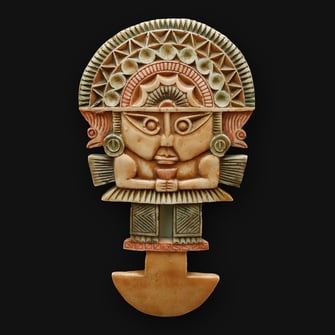
Tumi.jpg

Imagine a time when the very first tool, the humble knife, was crafted by human hands. Surprisingly, it remains the go-to tool for countless tasks today. From sewing to gardening, hairstyling to cooking, and even in the hands of artists and surgeons, knives play a vital role. They've become indispensable across a spectrum of professions, from the mechanical to the technological, and are equally at home on the dining table. Now, let's journey back and wonder: who were the trailblazers in using knives for medical purposes?

The oldest surgical tool

 There is evidence that the surgical knife dates back as far back as the Mesolithic era, around 8000 BC. One of the oldest surgical procedures was trepanation or trepanning, the art of drilling a hole into the skull. Findings suggest that flint knives were crafted to perform this procedure, and it is presumed that the skull was opened to allow the demons that caused headaches, melancholy or epilepsy to escape the body. Ancient Peruvian tribes also practiced trepanation. Findings in the community of Papahuasi, near the Huallaga River, reveal that the local indigenous people used an instrument known as Tumi for the procedure.

This artifact closely resembles a scalpel. It has a handle on one end, and a sharp blade on the other. Archaeologists also found stone mortars used to grind plants and other medical tools on the site, revealing that these pre-Columbian tribes possessed medical knowledge, and the Trepanned patients received herbal medical treatment to heal.

The Dark Ages

The first to use the word “scalpel” were the Romans. The word comes from the Latin ”scallpellus”, which was crafted during the golden age of surgery in Rome. During the second century AD, Celsius and Galen were the leaders of surgery and followed the teachings of Hippocrates. The ancient Romans were proficient in the art of making cutting instruments. Spears, knives and lances made out of bronze and iron have been found in many archaeological sites, like Pompeii.

After this century came the Dark Ages, where knowledge of surgery was lost and advancements in surgical instruments stopped. Medicine fell into the hands of religious fanatics. Superstitions further crippled medical knowledge. It wasn’t until the 16th century when Ambroise Paré, a barber surgeon, improved and refined surgical instruments more than anyone else before his era. During Paré’s time, physicians were the educated ones in diagnostics and academic medical practice, but the general tasks were left to barber surgeons. A doctor would diagnose and order the administration of procedures, which were carried out by barber surgeons. The latter also cut hair and pulled teeth for a living, so any surgical procedure would cause the patient pain. Sometimes, the pain was so excruciating, that patients would lose consciousness and faint. A quick and painful procedure was warranted at that time, since there was no use of antibiotics or anesthesia. Pain was an accepted part of surgery until Paré discovered that a gentle handling improved and transformed his patients. In1537 he broke away from traditional practices. He replaced the boiling oil solution needed to cauterize gunpowder-driven wounds with a soothing balm made from egg yolk, rose oil and turpentine. The following day, Paré was amazed to find that the patients who had received this new treatment were resting peacefully, while the cauterized ones were suffering in great pain and swelling around the edges of their wounds. Paré’s discoveries exerted a powerful influence over physicians and medical knowledge of the 16th century. He is considered the father of modern surgery.

It wasn’t until the 18th century that the profession of making surgical instruments was recorded in history. In the United States, the manufacture of surgical instruments developed slowly. It was after the first and second World Wars that American industry managed to catch up in manufacture leadership. John Sklar, for example, saw the need for American made surgical instruments and founded a company in 1892. He became the main surgical instrument provider for the American military forces during these wars and managed to establish himself at the forefront of the surgical marketplace shortly thereafter.

Today’s World

The modern scalpel, or surgical knife, has to meet specific requirements. The most important requirement is sharpness. This is why most scalpels have a disposable blade, to guarantee best performance. Other features are: shape, rigidity, balance, uniformity and dependability. The way a surgeon handles the scalpel is also important. It should not be held like a hammer, a racket, or a pen. It should be handled the same way a violinist holds a bow. In a surgical procedure, the scalpel becomes an essential tool for the surgeon’s actions.

Today there are more than 67 types of scalpel blades and 27 types of handles. Scalpels are labeled in two categories-- reusable and disposable. Reusable ones have a disposable blade, which is usually thrown away after its first use, attached to a reusable handle. Disposable surgical scalpels usually have a plastic handle attached to a retractable disposable blade. These disposable scalpels are single-piece, they are meant to be used once then thrown away. Many surgeons prefer them because they are lightweight and ready to use, whereas with reusable scalpels, one needs to take care while changing blades.
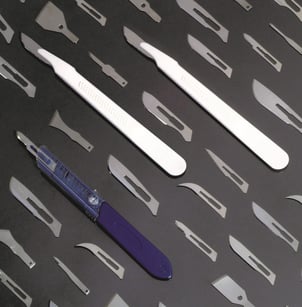
Scalpels.jpgMost blades are made of carbon or stainless steel. Although obsidian blades have also been around since prehistoric times, and there is evidence showing that obsidian scars heal better, this material is not Food and Drug Administration (FDA) approved. Obsidian is quite brittle and breaks easily when force is applied, making it unsafe for widespread use. In Germany, however, there is a manufacturer that does produce obsidian scalpels that can be used in rare cases where the patient is allergic to metal. This makes us ponder, what will scalpels be like in the future? There are many complex neurosurgery and eye procedures where a laser scalpel is more commonly used due to practicality. Yet, there still are many surgical procedures that require the use of a scalpel. Although technology keeps adding to medical breakthroughs, there are still some tools that continue to be essential.

Discoveries that changed the world | Surgical tools


 Surgical instruments, commonly referred to as manual tools, are employed by doctors to execute surgical procedures. A diverse array of tools exists, each tailored for specific operations. Typically crafted from materials such as carbon steel, stainless steel, aluminum, or titanium, modern surgical tools have significantly contributed to the advancement of medical practices. This innovation has facilitated quicker and more professionally executed surgeries, ultimately benefiting humanity.

The invention of modern surgical tools

The continuous search for very fine tools to achieve a high level of accuracy was a rule of Islamic practice, as it is the basic rule in modern science today, and in the tenth century, specifically in southern Spain, there was an accomplished surgeon called Aba Al-Qasim Khalaf Ibn Al - Abbas Al-Zahrawi, author of the book "Al-Tasrif." For Those Who Cannot Compose, "which is a true medical encyclopedia. In his book, he contained an article describing an amazing collection of more than two hundred surgical instruments.


This development of surgical tools was a revolutionary concept because it transformed medicine from contemplation to experimentation , and since the images of surgical tools some of their shapes were carved in the graves of ancient Egypt, Al-Zahrawi's article on surgical tools was the first in the history of medicine to describe surgical tools in detail, explain how to use them, and explain the circumstances. Which are used.


Al-Zahrawi's design of surgical instruments was so accurate that most of them had only undergone slight changes during a thousand years, and it was these explanations that laid the foundations for surgery in Europe after Al-Zahrawi's books were translated into Latin and spread in universities and European medical circles.

Al-Zahrawi revolutionized the world of surgery by introducing new procedures and innovative surgical tools. An example of the tools invented by Al-Zahrawi is the kidney and gallbladder stone fragmentation tool. Lewis and Spink (who recently translated Al-Zahrawi's book) described the originality of Al-Zahrawi's innovation for this tool, which the orthopedic surgeons did not see. In the European Middle Ages, none of them even mentioned it.


        Finally, surgical tools are among the tools that made doctors easier in the Renaissance and until they reached the current developments, where over this time they were an essential element in conducting many surgeries, and they may have had the main role in completing these operations and helping patients.

Friday, December 29, 2023

Navigating the World of Surgical Tools


   Surgical tools have become essential in advancing medical procedures, providing a delicate dance between benefits and drawbacks. In this exploration, let's take a closer look at the impact these tools have on the human side of medicine.

Advantages:

Thursday, December 28, 2023

ADSON TISSUE FORCEPS


  Adson Tissue Forceps, named after the famous American specialist Alfred W. Adson, are portrayed by their fine, serrated jaws and short, fragile handles. These Forceps are especially fine-tipped, sensitive instruments intended for getting a handle on and holding fragile tissues during surgeries. Adson Tissue Forceps are especially useful during procedures where careful tissue handling is essential due to their precision and dexterity. These Forceps have adaptable applications overall medical procedure. Their accuracy makes them important in many careful mediations.

Characteristics of the Adson Tissue Forceps:

Fine Serrated Jaws:

The finely serrated jaws of the Adson Tissue Forceps ensure a secure grip on delicate tissues without causing unnecessary damage. The serrations improve the instrument's capacity to handle and hold tissues with insignificant slippage.

Simple Design:

The forceps have a lightweight and sensitive plan, permitting specialists to move easily. Because of their shorter handles, they are better suited for precise, intricate procedures.

Assortment of Tips:

There are both straight and curved tips available for the Adson Tissue Forceps. Specialists can pick the most reasonable tip setup in light of the particular prerequisites of the system.


Applications in Medical procedure:

Dermatological Techniques:

Dermatological surgeries like skin grafting and microsurgery make extensive use of Adson Tissue Forceps. The fine tips permit specialists to deal with sensitive skin tissues with most extreme accuracy.

Ophthalmic Medical procedure:

Adson Tissue Forceps play a crucial role in ophthalmic surgery, which involves the delicate eye tissues. Specialists utilize these forceps for undertakings like taking care of fine stitches and controlling fragile eye structures.

Plastic Medical procedure:

Plastic specialists frequently depend on Adson Tissue Forceps for systems including delicate tissue control, guaranteeing that the honesty of the tissues is kept up with during medical procedures like facelifts and reconstructive medical procedures.


Sizes of Adson Tissue Forceps:

Here are some common sizes of Adson Tissue Forceps:📼

Standard Length:

The standard length of Adson Tissue Forceps is often around 4.75 inches (12 cm). This size is commonly used in general surgical procedures and provides a good balance between precision and maneuverability.

Micro-Adson Forceps:

For more delicate procedures, micro-Adson Tissue Forceps are available with a smaller length, often around 4 inches (10 cm) or less. These miniature forceps are particularly useful in microsurgery and procedures that require an exceptionally fine touch.

Extended Length:

Some Adson Tissue Forceps come in extended lengths, ranging from 5.5 inches (14 cm) to 6 inches (15 cm). The longer length may provide surgeons with additional reach and control during certain procedures.

Curved and Straight Tips:

Adson Tissue Forceps are manufactured with both straight and curved tips. The choice between the two depends on the surgeon's preference and the specific requirements of the surgical task. Curved tips may be preferred in certain situations where a more angled approach is necessary.


Tischler Forceps: Precision in Gynecological Surgeries


Tischler Forceps: 

Precision in Gynecological Surgeries


Tischler Forceps also known as Tischler-Naumann forceps, are specialized surgical instruments designed for delicate tissue manipulation, particularly in gynecological procedures. 

Types

Straight Tischler: Standard design for versatile use in gynecological surgeries.

Curved Tischler: Designed with gently curved jaws for better access to certain anatomical structures.

Tischler with Ratchet Lock: Featuring a ratchet lock for securing it in a closed position during procedures.

Tischler with Fenestrated Jaws: Includes small openings for better visualization and drainage during surgeries.

Applications:

   Used in a range of gynecological procedures, including hysterectomies and delicate organ manipulations. Their design ensures precision and minimizes tissue trauma.


The Precision Tools of Surgery: Forceps and Scissors Unveiled


   In the intricate world of surgery, precision is paramount, and the tools of the trade play a crucial role in ensuring successful outcomes. Among these tools, forceps and scissors stand out as indispensable instruments that surgeons rely on for their precision and versatility. In this blog post, we delve into the fascinating realm of forceps and scissors, exploring their various types, uses, and the critical role they play in the hands of skilled surgeons.

Surgical Forceps:

A Grasp on Precision Forceps are handheld instruments designed with two opposing blades and a hinge, allowing surgeons to grasp, hold, and manipulate tissues with precision. These instruments come in a variety of shapes and sizes, each tailored to specific surgical tasks. Some common types include:

Tissue Forceps: These forceps are designed with delicate tips for holding and manipulating delicate tissues without causing damage.

Hemostatic Forceps: Essential for controlling bleeding during surgery, hemostatic forceps have a locking mechanism that clamps blood vessels, reducing blood flow and facilitating a bloodless surgical field.

Dressing Forceps: With their fine tips and slender design, dressing forceps are ideal for handling sterile dressings and delicate materials.

Dissecting Forceps: Used for precise dissection of tissues, these forceps have fine, pointed tips that allow surgeons to separate tissues with minimal trauma.

The versatility of forceps makes them indispensable in various surgical specialties, from general surgery to neurosurgery and beyond. The ability to grasp and manipulate tissues with controlled force is crucial for ensuring optimal surgical outcomes.

Surgical Scissors:

Cutting through the Complexity While forceps excel at holding and manipulating tissues, scissors are the go-to instruments for precise cutting. Surgical scissors are designed with sharp blades and a handle, allowing surgeons to make controlled incisions. There are several types of surgical scissors, each crafted for specific purposes:

Operating Scissors: These scissors have straight or curved blades and are used for cutting tissue, sutures, or other materials during surgery.

Metzenbaum Scissors: With longer, thinner blades and a more delicate design, Metzenbaum scissors are ideal for cutting delicate tissues in procedures such as plastic surgery.

Mayo Scissors: Recognized by their robust design and straight blades, Mayo scissors are commonly used for cutting heavy tissues, such as muscles or fascia.

Iris Scissors: Featuring small, fine tips, iris scissors are perfect for intricate and precise cutting tasks, often used in ophthalmic surgery.

The meticulous selection of scissors based on the surgical task at hand is crucial for achieving optimal results and minimizing tissue trauma.Precision in Every Cut In the world of surgery, where every move counts, forceps and scissors emerge as the unsung heroes, providing surgeons with the precision and control they need to navigate through complex procedures. From the delicate touch of forceps to the sharp precision of scissors, these instruments play a pivotal role in the success of surgical interventions across diverse medical specialties. As technology advances, so too do these instruments, ensuring that surgeons continue to wield the most refined tools in their pursuit of excellence in the operating room.

Friday, December 22, 2023

The Unsung Heroes of Surgery: Unveiling the Mastery of Forceps"

vision reigns supreme, an unsung hero quietly plays a pivotal role: the forceps. Often overshadowed by more glamorous surgical instruments, forceps stand as unassuming yet indispensable tools, bearing witness to the delicate dance of healing hands within the operating theater.

Evolving across centuries, forceps have transformed from humble origins into a diverse array of instruments, each designed with a specific purpose. They are the silent companions of surgeons, aiding in delicate maneuvers, facilitating precise incisions, and lending their unyielding grasp to ensure the success of intricate procedures.

At their core, forceps are more than mere metal implements—they are the extensions of a surgeon's skill, precision, and finesse. These instruments, with their varying shapes, sizes, and specialized functions, empower surgeons to navigate the human anatomy with finesse and expertise.

Imagine the scene within the operating room—the careful hands of a skilled surgeon, guided by forceps, delicately manipulating tissues, holding blood vessels, and suturing with unwavering accuracy. It's a symphony of dexterity, where forceps play a crucial role in orchestrating the harmonious performance of surgical procedures.

From the graceful arc of a hemostat, staunching the flow of blood, to the slender tips of fine forceps delicately handling delicate tissues, each iteration serves a distinct purpose. They are the unsung guardians of hemostasis, the precise architects of tissue manipulation, and the trusted aides in the closure of wounds.

Forceps embody versatility, adapting to diverse surgical landscapes. In the realm of minimally invasive surgery, they take on a new persona—slender, agile, and indispensable. They assist surgeons in navigating the intricate spaces within the human body through tiny incisions, augmenting precision in the most confined of settings.

Beyond their functional prowess, forceps harbor stories of innovation and craftsmanship. Crafted with precision and refined through the ages, they symbolize the intersection of science and artistry, where meticulous engineering meets the finesse of surgical expertise.

Their significance reverberates not only within the surgical suite but also in medical history. Forceps have been witnesses to the evolution of surgical techniques, marking milestones in the advancement of medical science and the enhancement of patient care.

Yet, despite their integral role, forceps often dwell in the shadows of more high-profile surgical tools. Their subtle elegance and quiet efficiency belie their importance—a testament to their understated yet indispensable presence in the world of surgery.

So, let us raise a silent tribute to these unassuming heroes—the forceps. May their unwavering grip, precision, and versatility continue to guide the hands of surgeons, shaping the narrative of surgical excellence and contributing silently yet significantly to the healing of humanity?


HOW TO STERILIZE YOUR DENTAL INSTRUMENTS THE CHEAP WAY

Sterilizing dental instruments is a critical aspect of maintaining a safe and hygienic environment in dental practices. Ensuring proper st...